Curiosity • Computers • Ideas • The Future

Science &
Technology

A lifelong journey from childhood discoveries to artificial intelligence

Science and technology have been threads running through my life for decades. This page will bring those chapters together — the early discoveries, the computers, the experiments, the work, the projects, and the questions that still keep me curious today.

Science and technology in Jerry Schmeer's life
Science, technology, and a lifetime of asking “What can we do with this?”

The chapters ahead

My Science & Technology Journey

This page follows that journey in eight chapters—from childhood curiosity and early ideas, through computers and work, to the questions about artificial intelligence that fascinate me today.

01

Introduction & Cape Cod Science

Why I built CapeCodScience.com and what I hope it gives people.

This is the doorway into the whole story: why science matters to me, why I created CapeCodScience.com, and how the site brings together resources, subjects, organizations, ideas, and opportunities for people who want to keep learning.
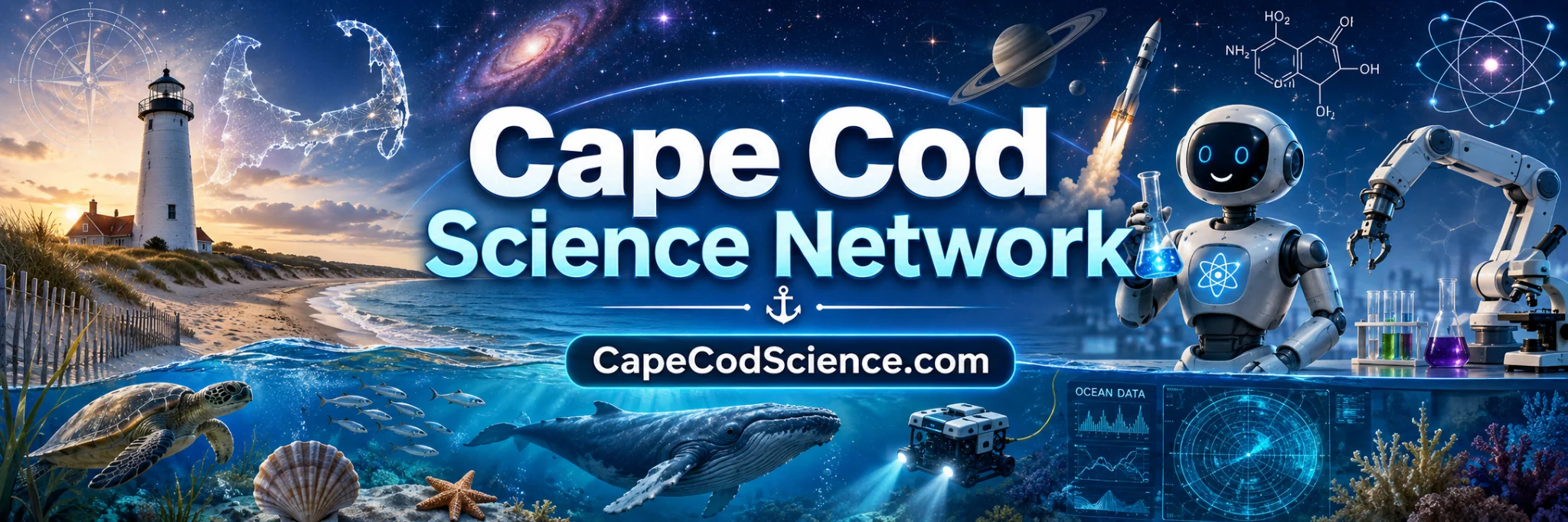
CapeCodScience.com A growing Cape Cod resource for science, technology, STEM/STEAM, education, discovery, and community.
Explore the Site
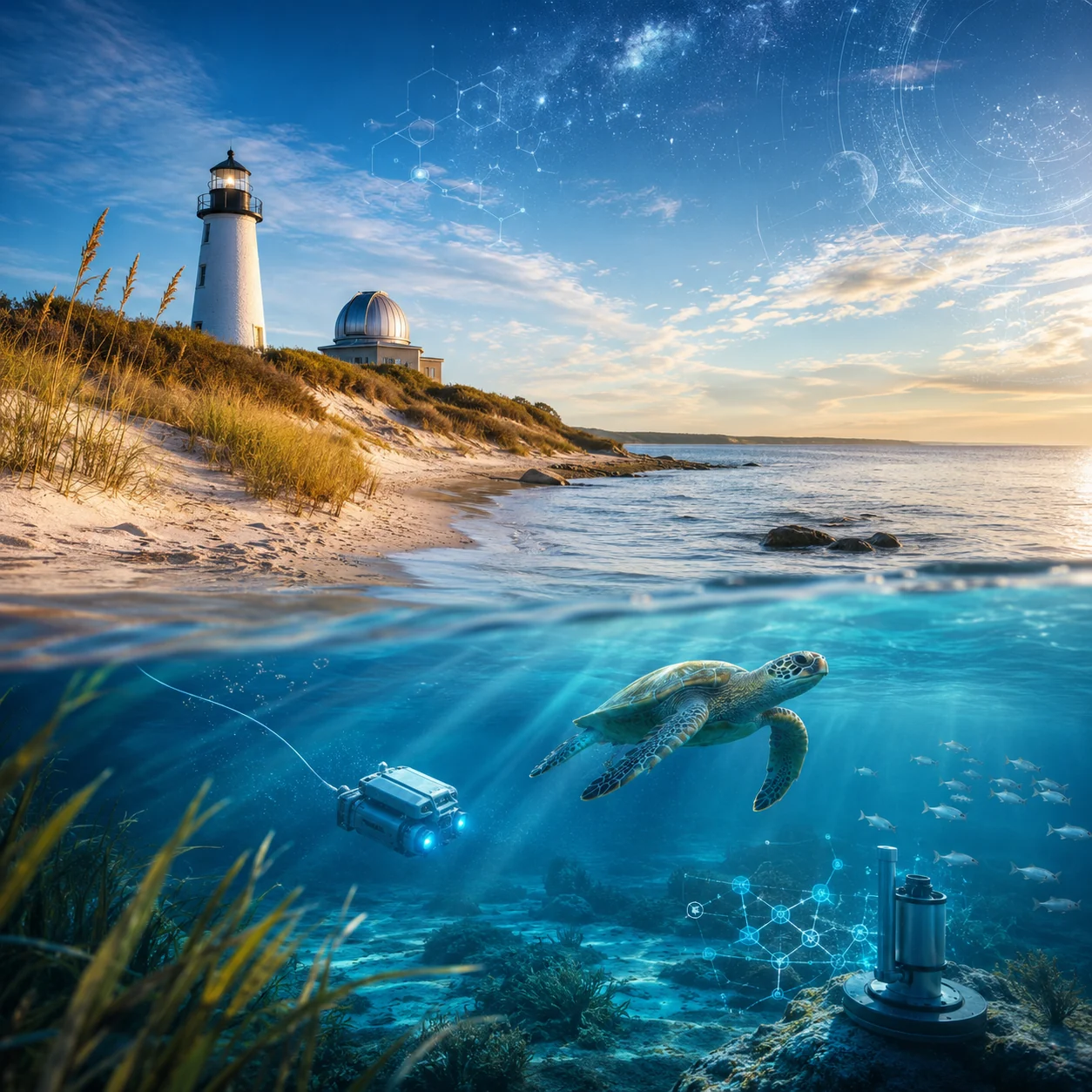
Cape Cod Science Network banner for CapeCodScience.com Cape Cod science illustration with lighthouse, observatory, ocean life, and marine technology

Tap or click the image to visit CapeCodScience.com.

Why I Created Cape Cod Science

I created CapeCodScience.com for the explorers, students, teachers, dreamers, and lifelong learners who understand how important science and technology are—not only to our everyday lives, but to the kind of future we choose to create.

My fascination with science began when I was very young. Like so many kids growing up, I dreamed of becoming an astronaut and traveling into space. I haven't completely given up on that dream. I would still love, at the very least, to see Earth from space someday.

That dream connects closely with another project that means a great deal to me, the Global Pledge. I believe that if more people could see our planet from space—even if only through the eyes and experiences of those who have been there—we might begin to understand something very important: there are no borders visible from space. We are all living together on one small, beautiful blue world floating in an enormous universe.

Perhaps we would treat both the planet and one another with a little more respect if we truly understood that.

I had originally hoped to pursue a formal education in science. But my high-school years were anything but conventional. I moved around quite a bit and attended five different high schools. Without the scholarships and financial support I would have needed, a traditional scientific education never quite came together for me.

So I learned another way.

Much of my education in science and technology came through my own curiosity—reading, experimenting, building things, working with computers, asking questions, following new ideas, and teaching myself whatever I needed to know next.

And that is really the foundation of Cape Cod Science.

I wanted to create the kind of resource I would have loved to have when I was younger: a place where someone can begin with curiosity and discover an entire world waiting for them.

It is a resource for the young person wondering whether science might become a career. It is for the teacher trying to inspire tomorrow's scientists, engineers, inventors, programmers, doctors, environmentalists, astronomers, and explorers. And it is for people like me who simply never stopped wanting to understand how the world works.

CapeCodScience.com brings together subjects ranging from biology, chemistry, physics, mathematics, marine science, environmental science, and space exploration to computers, artificial intelligence, robotics, STEM and STEAM education, citizen science, museums, organizations, and many other areas of discovery.

My goal is for it to become one of the most inclusive and useful science and technology resources possible—not just a collection of links, but a doorway.

A doorway to curiosity.

A doorway to education.

And perhaps, for someone visiting the site today, a doorway to a future they haven't even imagined yet.

Science has given humanity extraordinary power. Technology continues to expand that power every day. What matters now is how we choose to use it.

I hope Cape Cod Science helps people use that knowledge wisely, creatively, and ultimately for the good of humanity and the planet we all share.
02

My Early Science Discoveries

The childhood curiosity that started the journey.

By almost any definition, I was a pretty perfect science nerd—and I fit the description to a tee. Growing up, while many of the kids around me were collecting and reading Sports Illustrated—although I have to admit I always appreciated the swimsuit issue—I was eagerly waiting for my next issue of Science News, the publication that had originally been known as Science News Letter. I looked forward to it every week.

Science wasn't just something I read about. It shaped the way I thought about the world. Even as a kid, I often felt that my mind worked differently from those of many of the other kids in my neighborhood. At one point I even wondered whether I might have been visited by space aliens, because I sometimes felt as though I knew things—or imagined possibilities—that no one around me seemed to be thinking about.

Whether that was childhood imagination, an unusually curious mind, or simply the influence of all the science and science fiction I was absorbing, I was constantly trying to create explanations for things. By the time I was about thirteen years old, around 1970, I had already developed two projects of my own: The Logical Alphabet and Gerard's Möbius Time Strip Continuum Theory.

Why “Gerard”? At thirteen, I simply thought Gerard sounded cooler than Jerry.

Looking back, I don't think the important part is whether the ideas of a thirteen-year-old were scientifically correct. What matters to me is that I was already trying to invent systems, challenge assumptions, and find my own way of explaining language, time, space, and reality. That instinct—to ask “Could there be another way to understand this?”—has stayed with me ever since.

Project One

The Logical Alphabet

From my early notebooks I am gathering the surviving notes, drawings, or artwork connected with The Logical Alphabet.
About the project

I was about thirteen when I created this idea. As I reconstruct the details, I want to preserve both how the system worked and what I was trying to solve at that age.

Project Two

Gerard's Möbius Time Strip Continuum Theory

From my early notebooks I am gathering any surviving diagram, drawing, or notes connected with the theory.
About the theory

I gave this idea a wonderfully ambitious name when I was about thirteen. As I reconstruct it, I want to preserve the idea as faithfully as I can—and the imagination behind it.

03

Gifted Students Program & Science at School

Learning in an environment that encouraged deeper exploration.

This chapter looks back at my time in the Gifted Students Program and at the role science played in my school years. It is a part of the story I want to tell carefully—through the teachers, challenges, opportunities, and moments that helped shape the way I learned.

Gifted Students ProgramSchool scienceTeachersLearning differently
04

The Radio Shack Years

A major technology chapter told in three parts.

Radio Shack deserves more than a passing mention, so I have divided this chapter into three parts. That gives me room to show how the experience evolved instead of compressing an important period into a few paragraphs.

Part One

The Beginning

The first Radio Shack chapter—how I arrived there and what the technology world looked like at the time.

Part Two

Growing With Technology

The people, products, computers, responsibilities, and experiences that expanded what I knew.

Part Three

What Came Next

How those years influenced the next turn in my technology journey and the ideas I carried forward.

There is much more to this period than job titles and products. The people, machines, changes, and unexpected turns are what make it part of my larger technology story.

05

Autosoft — Almost Microsoft

My technology time in Hawai'i.

Autosoft belongs to my Hawai'i years, at an intersection of computers, ambition, experimentation, and a place that became a major part of my life. The phrase “Almost Microsoft” is a little playful, but there is a real story behind it—what I was trying to create, why the idea seemed possible, and what happened next.

AutosoftHawai'iEarly computer business“Almost Microsoft”
06

Cape Cod Community College

My computer experience at the college.

My years at Cape Cod Community College brought computer systems, programming, reports, and day-to-day problem-solving into the practical side of my technology life. This chapter is where I can preserve the work itself—and what years of watching computers change taught me along the way.

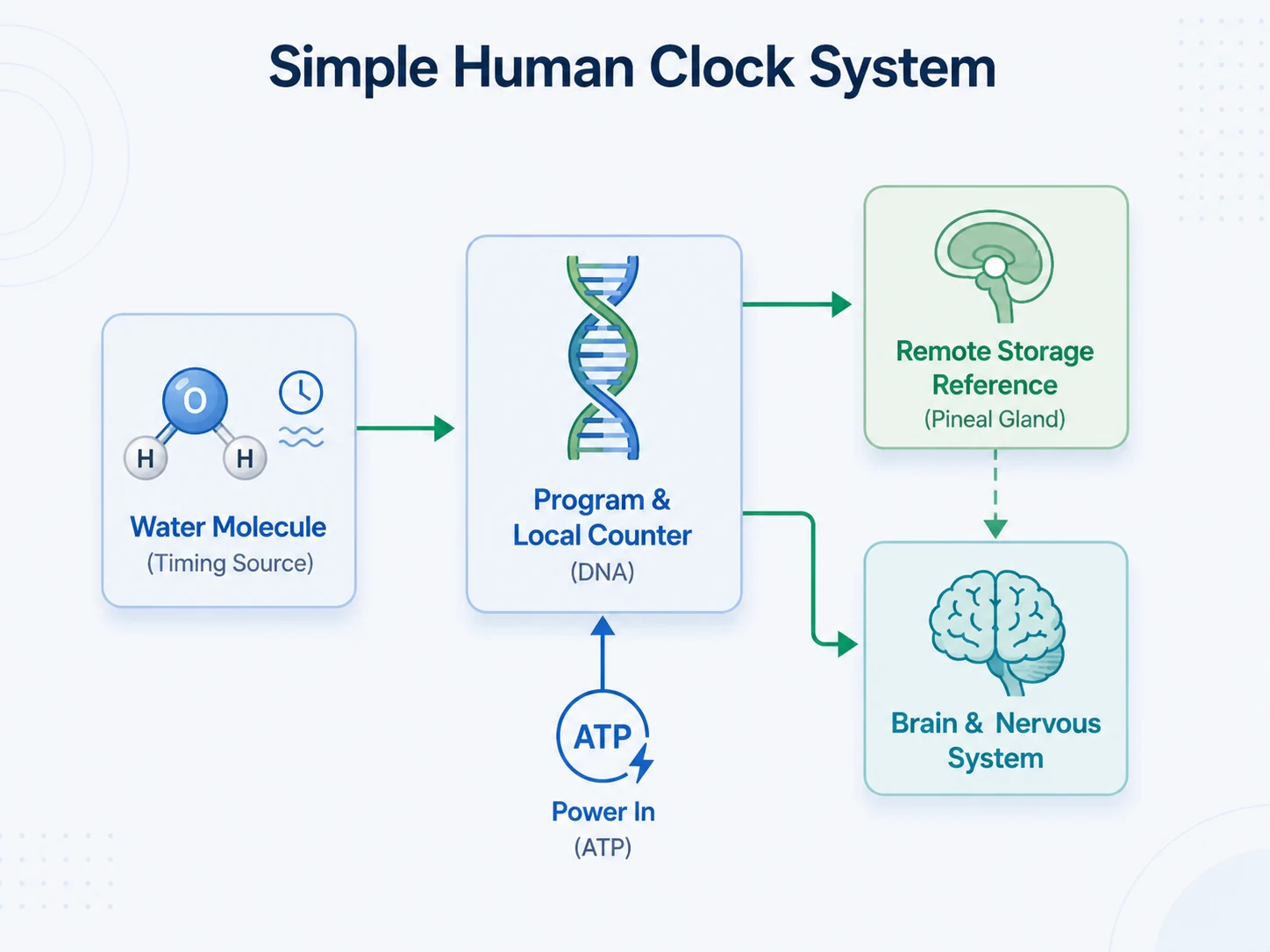
Modern recreation of the Simple Human Clock System from Jerry Schmeer's 1989 paper The Wobble Effect A bridge between biology and computing · 1989 The Wobble Effect For a Biology II paper, I took something I already understood—a computer clock—and used it as a model for asking how a biological clock might work. The paper connects water molecules, DNA, oscillation, and computer timing architecture. I have now preserved the original paper and recreated its diagrams for the web. Read the article and original paper →
ProgrammingCollege systemsProblem-solvingReal-world computing
07

Little Projects Along the Way

The side projects, experiments, websites, and ideas that kept appearing.

Not everything fits neatly into a job title. This chapter is a home for the smaller projects and experiments that appeared along the way—the things I built because I was curious, saw a need, or simply wanted to see whether an idea could work.

ExperimentsWebsitesSide projectsIdeas worth trying
08

Exploring Artificial Intelligence

What fascinates me, what I am building, and what I am asking today.

This is the living chapter—my exploration of artificial intelligence and the many things that interest me today. It can grow with the work: AI, robotics, creativity, knowledge, websites, human possibility, and the question of how emerging technology can serve people rather than diminish them.

Artificial intelligenceRoboticsHuman potentialKnowledgeCreative collaborationThe future

This chapter is intentionally open-ended. Artificial intelligence is changing too quickly for a final paragraph, and I expect the questions, experiments, and projects here to keep evolving with it.

Still learning

The Story Is Still Being Written

One of the things I have always loved about science and technology is that there is always another question to ask, another tool to understand, and another possibility waiting just beyond what we know today.